
Establishing Governance Method
Governance is the system of roles, policies, and procedures that determines how an organization's content and information architecture are created, maintained, and evolved. It encompasses ownership assignments, editorial workflows, publishing standards, and the ongoing decision-making authority needed to keep digital systems coherent and effective.
Governance is especially critical for organizations with large content sets, multiple contributors, or complex information architectures. Without clearly defined roles and enforceable standards, even well-designed systems degrade over time as ad hoc decisions accumulate. Effective governance balances oversight with content velocity, ensuring that the people responsible for a system have both the authority and the processes needed to maintain it.
Preparation
Establishing Governance is often more effective when it is informed by these complementary methods.
-

Navigation Design
The system of links that allows users to move between pages of a website.
-

Stakeholder Interviewing
Understanding the perspective and influence of those invested in a project's success
-

Taxonomy Design
Define a system for labeling and classifying content to make it easier to find, understand, and use
-

Wireframing
Interface illustration that focuses on prioritization, functionality, and behavior
-

Use Cases
Written descriptions of how users will perform tasks with your product or on your website
-

Domain Modeling
Define the concepts and relationships that inform effective structured content design
Steps
- Define scope and objectives
Identify what your governance framework needs to accomplish and the systems it will cover. Governance may apply to a website, a content management system, an information architecture, a taxonomy, or all of these. Clarify whether the primary challenge is consistency of publishing, structural coherence, editorial quality, or cross-channel coordination. A well-defined scope prevents governance from becoming either too broad to enforce or too narrow to be useful. - Establish roles and authority
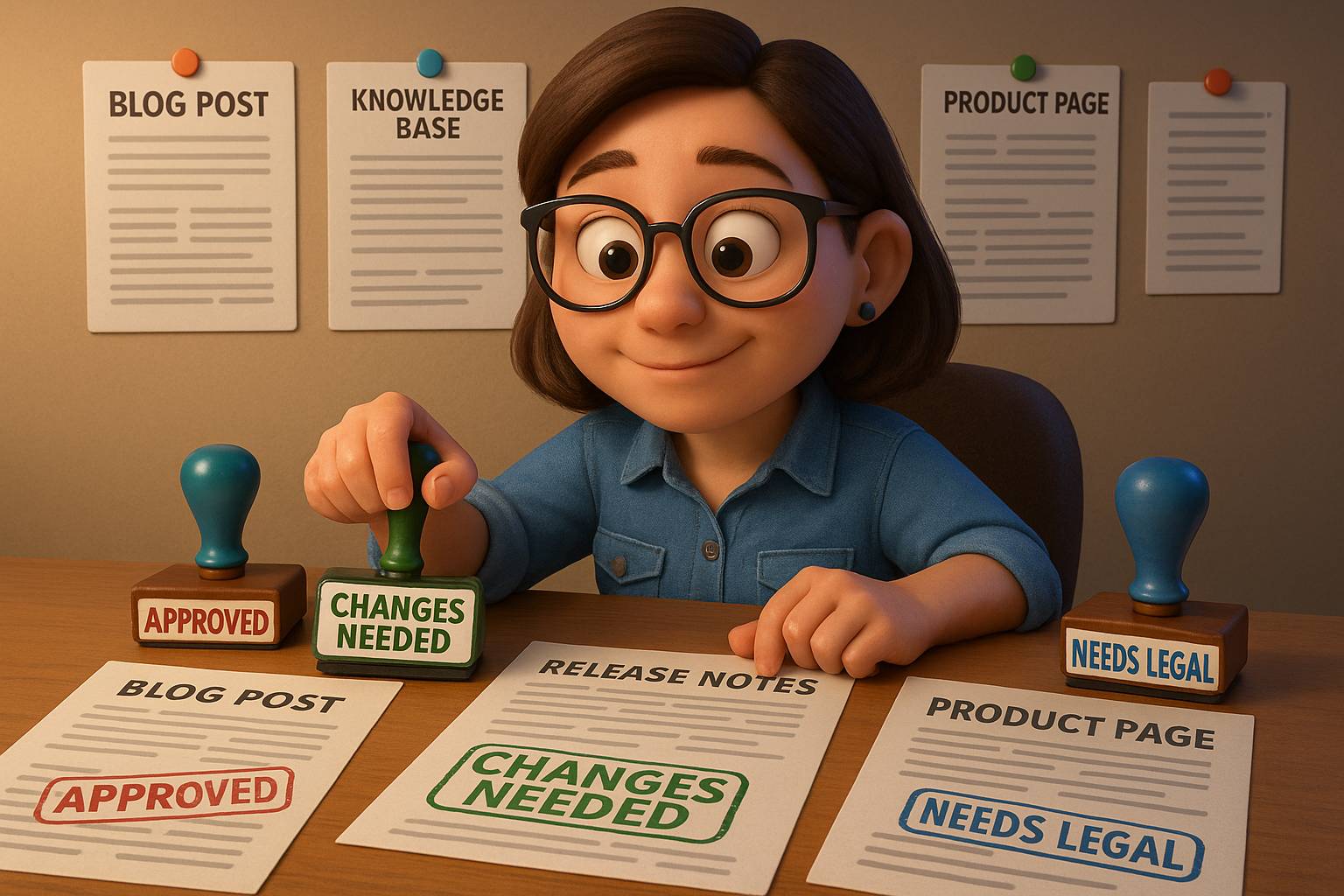
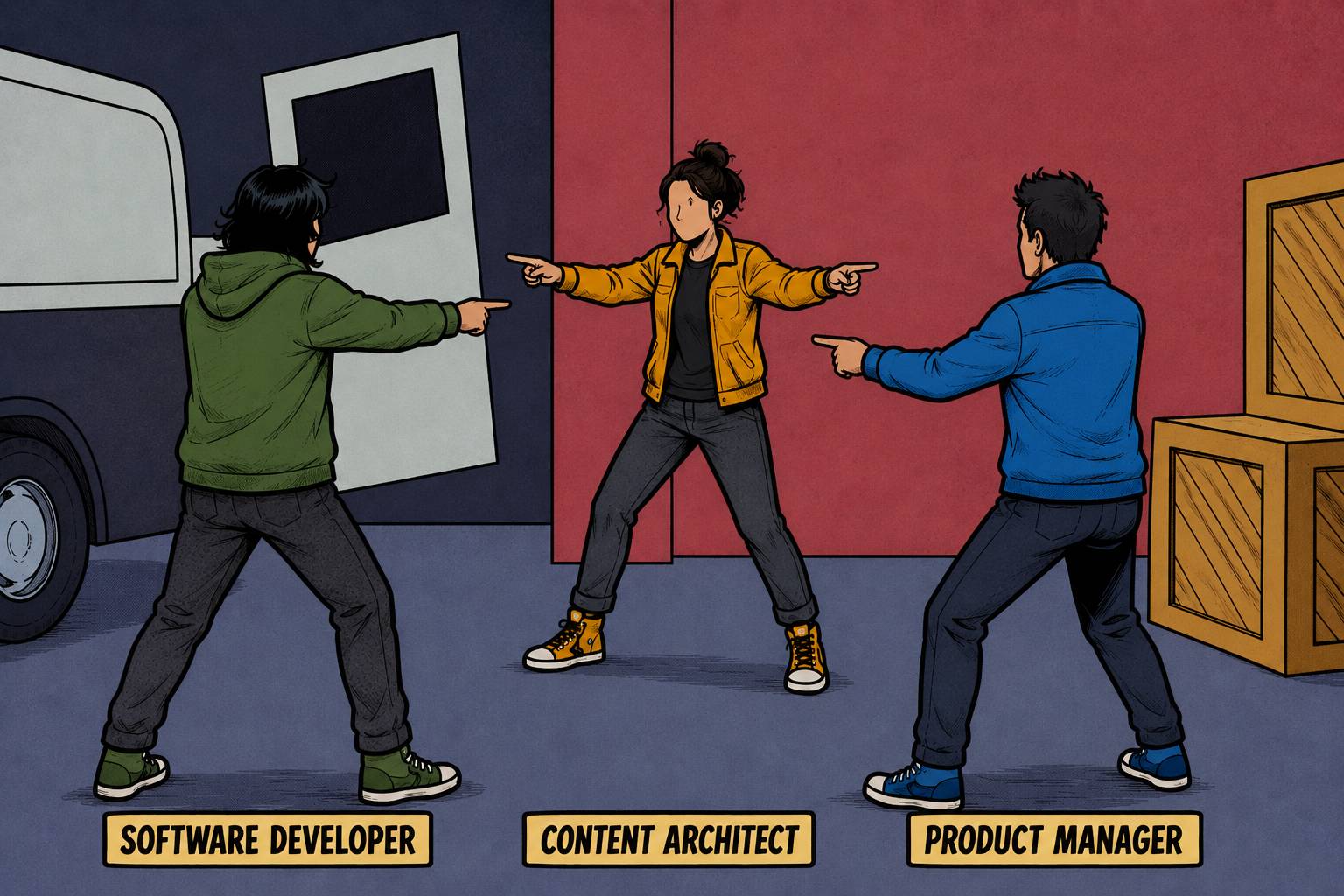
Assign clear ownership by designating who is responsible for governance decisions and who has the authority to enforce them. Effective governance requires at least one accountable steward with the power to approve or reject changes to the system. Draw from data governance models that distinguish between stewards, custodians, and administrators. Without someone who can say "no" to publishing, governance rules remain unenforceable regardless of how well they are documented. - Design workflows and standards
Document the processes that content and structural changes must follow from creation through publication and revision. Specify review stages, approval criteria, and escalation paths. Include standards for naming conventions, metadata requirements, and structural patterns so that decisions made within the system remain consistent. Align workflows with your content model so that governance decisions and content modeling decisions reinforce each other rather than operating in parallel. - Implement and train
Put governance processes into practice by integrating them into your content management tools and training everyone who creates, reviews, or publishes content. Documentation alone is insufficient; people need to understand both the rules and the reasoning behind them. Tools can support governance through templates, validation rules, and required fields, but they cannot substitute for clear policy and informed decision-making. - Review and evolve
Conduct periodic reviews to assess whether your governance framework is achieving its objectives. Evaluate whether roles are functioning as designed, whether standards are being followed, and whether the system still serves current needs. Governance is continuous, not a one-time project. As content, audiences, and organizational priorities change, your governance framework must evolve to keep the systems it supports coherent and relevant.
Outcomes
Establishing Governance typically produces insight and solutions focused on these areas:
-
Classification Model
The arrangement and structure of categories used to classify content and resources.
-
Metadata Scheme
The structure of data elements used to describe a collection of content and functionality.
Resources

Next Steps
-

Navigation Design
The system of links that allows users to move between pages of a website.
-

Wireframing
Interface illustration that focuses on prioritization, functionality, and behavior
-

Usability Testing
Observation of users performing a series of tasks to gather feedback on flows, design, and features
References
Establishing Governance Method details last edited on 2025-06-30